
The Expert insights on Foot-and-Mouth Disease, market trends, and technical strategies across Asia
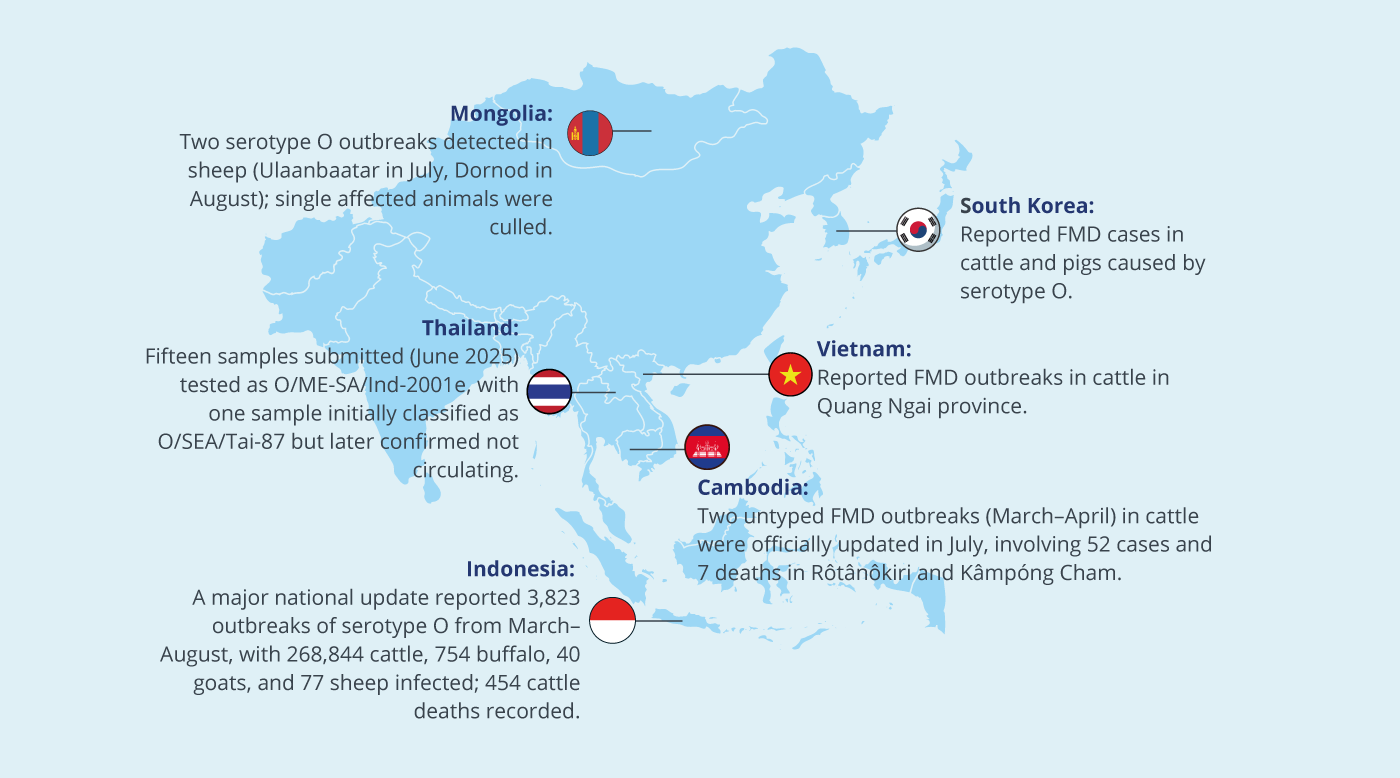
Asia is classified into two WOAH endemic pools: Pool1 (Southeast/Central/East Asia) and Pool2 (South Asia). FMD serotypes O, A, and Asia 1 are the predominant strains in the region. The O/ME-SA/Ind-2001e lineage remains the most widespread strain, affecting Indonesia, South Korea, Thailand, Mongolia, and Nepal. Several countries (Indonesia, Cambodia, Mongolia) reported new or ongoing outbreaks, with cattle and buffalo accounting for most cases. In South Asia, India confirmed an FMD-O outbreak in captive deer, while Nepal submitted multiple O/Ind-2001e–positive samples.
Overall, Asia faces persistent endemic circulation of serotype O, with Ind-2001e as the predominant and expanding lineage in the region but we are closely monitoring O/ME-SA/SA-2018 lineage, which is an emerging strain that poses a growing threat to the region.
Source: WOAH-FAO FMD Ref Lab Report Jul-Sep 2025
In Q3 2025, global FMD activity was driven primarily by expanding SAT1 circulation in Western Asia, widespread SAT2 transmission in Southern Africa, and persistent serotype O activity throughout Asia. Europe remained free of new cases following earlier 2025 incursions. No activity occurred in South America, sustaining the region’s stable FMD-free status.
FAO warns countries in North Africa, West Asia, and the Caucasus to strengthen preparedness after the exotic FMD serotype SAT1 spread beyond its usual range in sub-Saharan Africa. Since its first detection in Iraq (April 2025), SAT1 has been reported in Kuwait, Türkiye, Egypt, and Azerbaijan, with additional unconfirmed reports in the region’s dairy sector, raising concern due to the population’s lack of natural or vaccine-induced immunity.
SAT1 continues expanding, with outbreaks in Bahrain, Iraq, Kuwait, Türkiye, and suspected cases in Egypt; October reports indicate further spread to Azerbaijan. Over 800 outbreaks reported in Türkiye this year, dominated by SAT1.
No new FMD cases detected since April; Hungary and Slovakia regained WOAH FMD-free status, recovering from earlier 2025 incursions. Germany reports outbreak costs approaching €1 billion due to lost market access.
North & West Africa: New detections of SAT1 in Egypt, and continued circulation of serotype O in Algeria, Libya, and parts of West Africa; Burkina Faso reports possible first SAT1 detection (pending confirmation).
Southern Africa: Ongoing intense circulation of SAT2, with widespread outbreaks in Eswatini (57 outbreaks), South Africa (141 outbreaks), Mozambique, and Zimbabwe; SAT1 also detected in Zimbabwe and Mozambique.
No FMD outbreaks reported this quarter.
Source: WOAH-FAO FMD Ref Lab Report Jul-Sep 2025
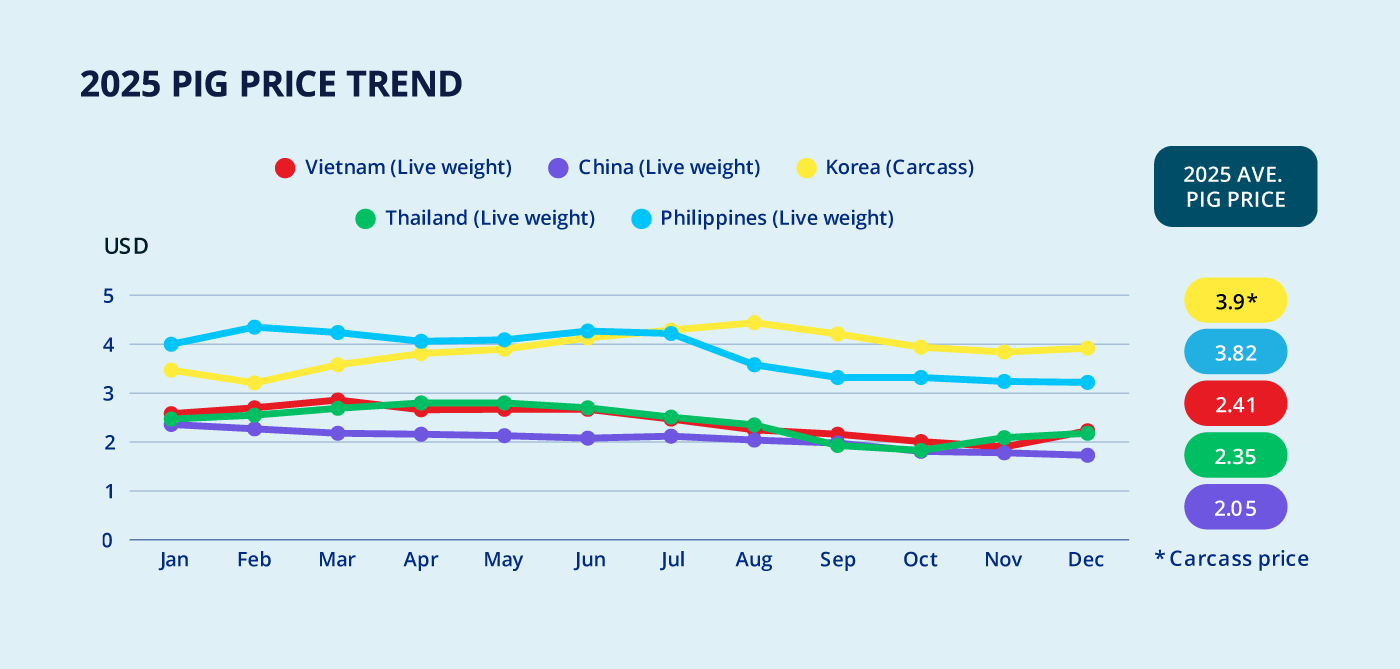
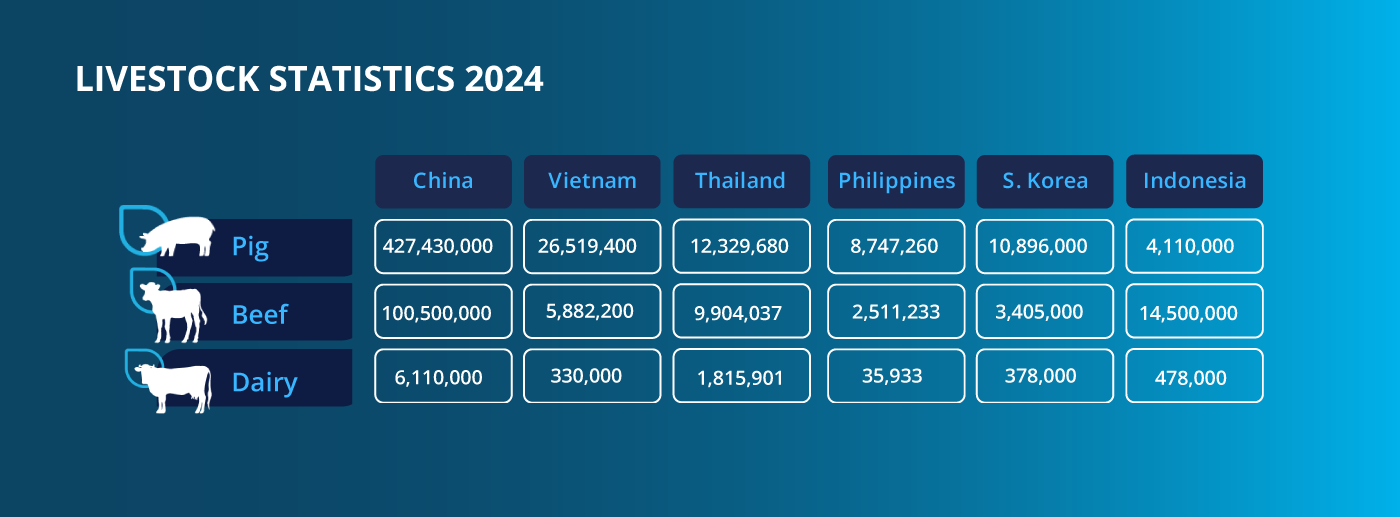
Asia’s pork industry faces ongoing disease pressure, especially ASF, which continues to disrupt production in key markets such as Vietnam, the Philippines, and parts of China. Despite these challenges, regional supply is mixed: China is cutting its sow herd to stabilize prices, Vietnam is experiencing liquidation-driven short-term supply increases, and the Philippines remains tight due to persistent ASF losses. Overall, Asian pork markets are shaped by volatile production, strong import flows, and heightened biosecurity demands.
LIVESTOCK NEWS
China cuts its breeding sow herd amid a pork supply glut.:
China’s sow herd fell below 40 million by the end of October as the government urged producers to curb output and stabilize the market amid weak demand and excess capacity. Authorities have called for tighter control on production, including limiting new capacity and enforcing earlier output adjustments.
Vietnam: Heavy floods in Central region have caused severe livestock losses:
More than 3.2 million livestock and poultry were swept away during the recent floods (16–23 Nov) in provinces such as Đắk
Lắk, yet major farms in the North and South are unaffected and restoration is expected to prevent any meat shortage for
Tết.
Thailand to Tackle Pork Surplus with Nationwide Stabilization Plan:
Thai pork prices have dropped below production costs due to weak demand, economic slowdown, and oversupply,
pressuring farmers nationwide. In response, the Swine Raisers Association of Thailand and six regions have launched
emergency measures—special-price pork sales, piglet cycle cuts, cold storage, and slaughter limits—to reduce surplus and
stabilize the market.
Philippines Pig Prices Surge Amid ASF Outbreaks and Soaring Imports:
Pig prices in the Philippines surged over 10% in Q1 due to tight supply, but began easing in Q3 amid ASF incidence and a
30% increase in pork imports, mainly from Brazil.
South Korea has escalated its national alert for ASF:
The ASF monitoring dashboard shows a cumulative 4,365 confirmed cases with the vast majority in wild boar and a smaller
number in domestic pigs, reflecting ongoing virus circulation among wildlife. Efforts by authorities include enhanced
environmental surveillance, strict farm biosecurity measures, and outbreak response actions to control ASF spread.
Source: Compiled and summarized by Biogénesis Bagó Asia
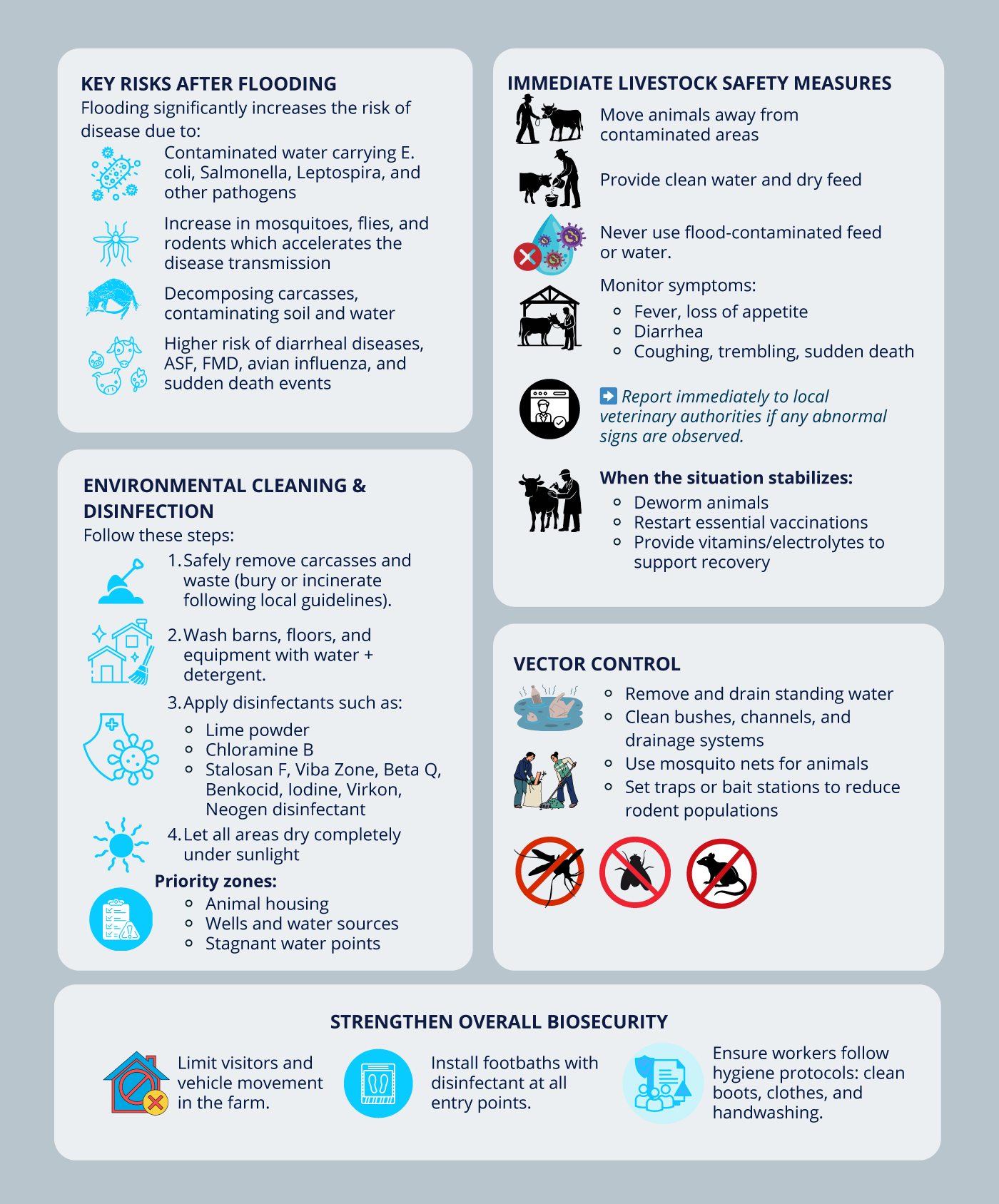
BIOSECURITY MEASURES AFTER A FLOOD
Severe storms and floods across Southeast Asia in recent weeks have damaged farms, contaminated the environment, and increased the risk of disease outbreaks. To help farmers protect their animals, the following recommendations summarize the most important biosecurity measures to implement immediately after flooding.
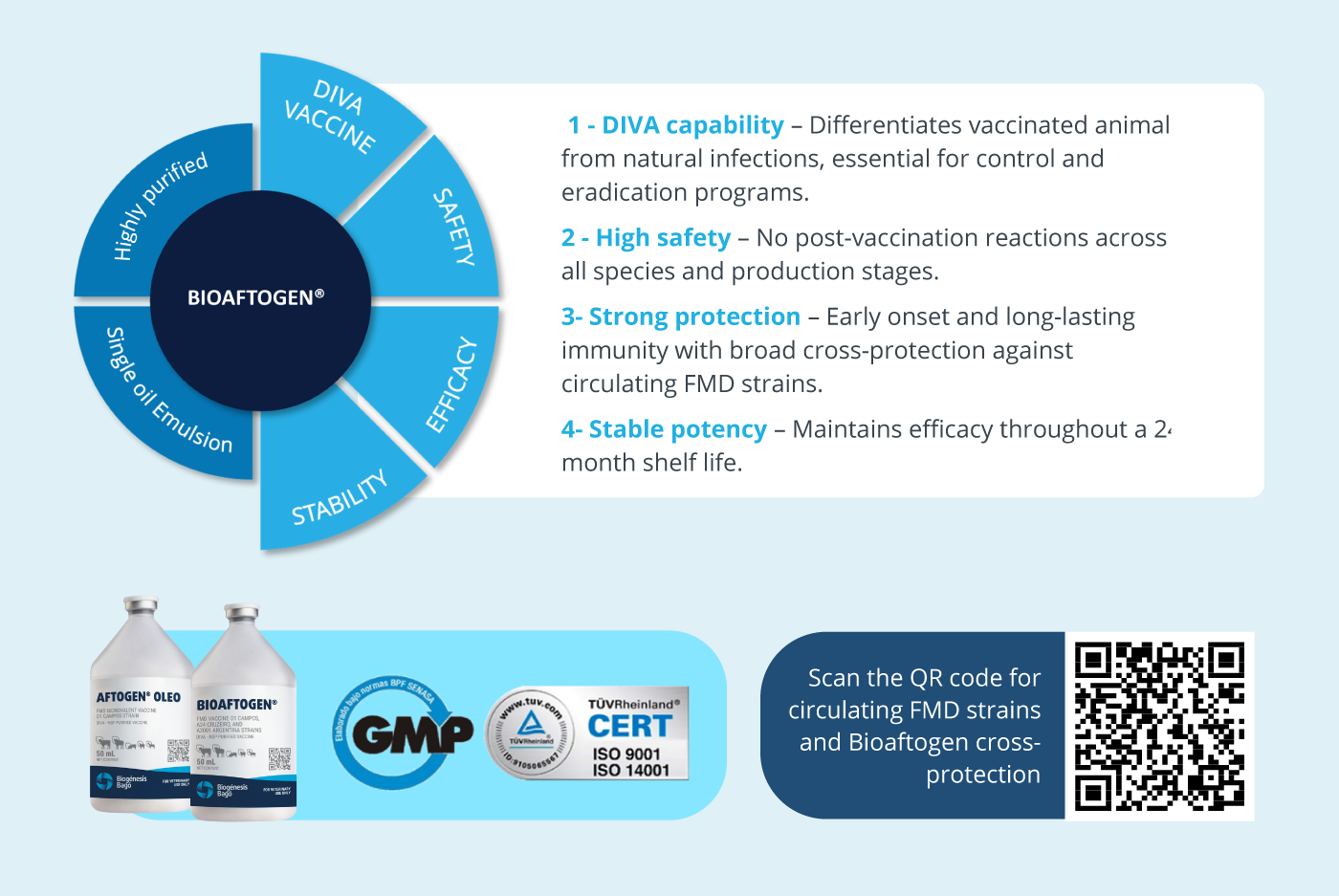
Health, innovation, and commitment in the region
Biogénesis Bagó is a global biotechnology company dedicated to
animal health, recognized for its leadership in the prevention and
control of Foot-and-Mouth Disease (FMD). With a presence across five
continents and exports to more than 60 countries, we combine
scientific excellence and local expertise to offer innovative solutions
that protect livestock productivity and food security.
In Asia, with manufacturing facilities in China and South Korea and a
new regional office in Vietnam, we continue to strengthen our
commitment to the region through specialized technical teams,
training programs, and strategic alliances with local partners.
This biannual newsletter is part of that commitment, delivering timely
updates on FMD outbreaks, market insights, and practical technical
recommendations to help you protect your herds and ensure longterm farm sustainability.
“Our mission is to support the sustainable growth of Asian livestock
production by offering safe, high-quality vaccines that ensure productivity continuity and sanitary confidence.”
— Biogénesis Bagó Asia Team